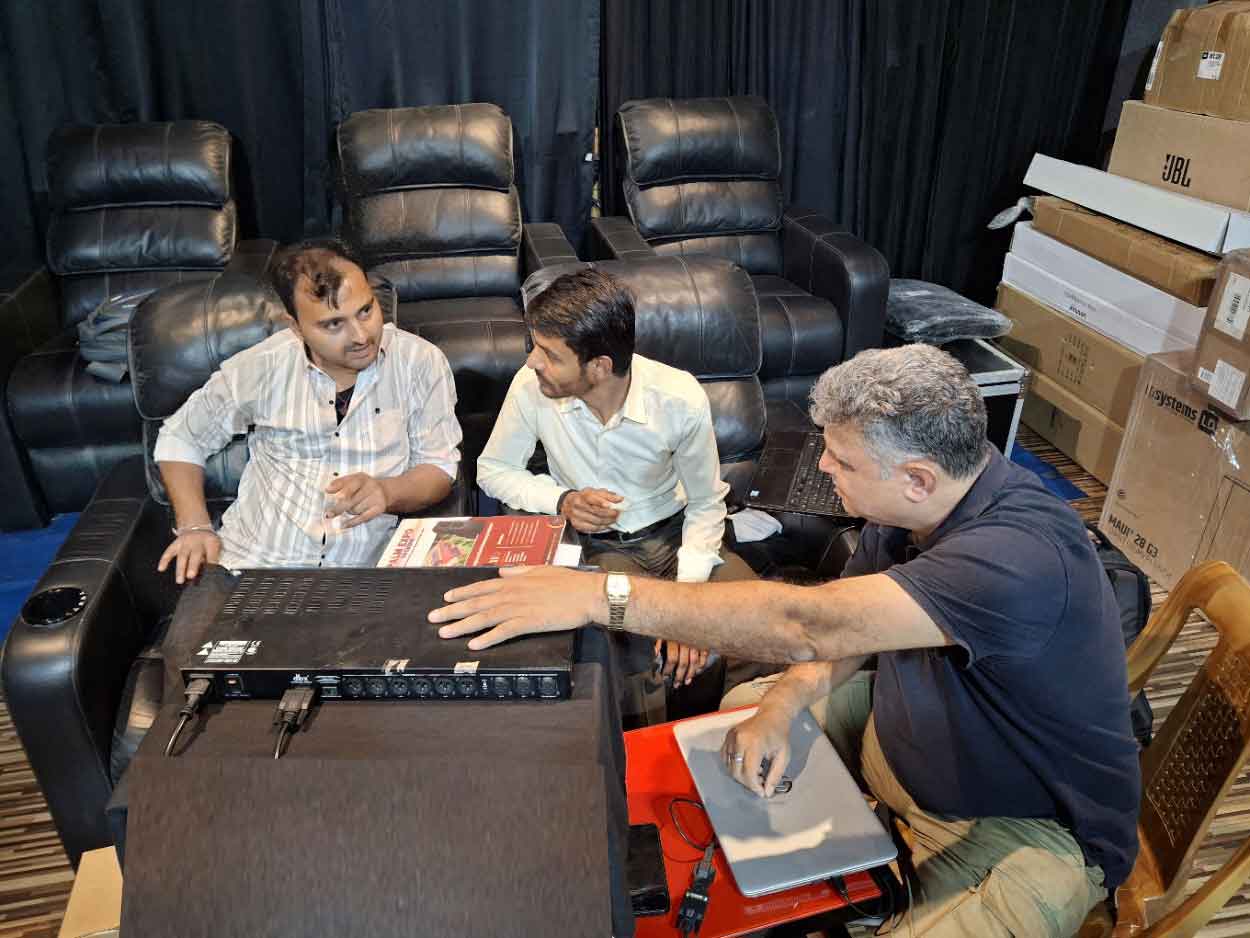
A structured Crisp, Professional Set of 10 Highlights Of Training Curriculum for Digital Crossover Systems Training. Laid out as a professional syllabus with modules, objectives, and exercises.
- Comprehensive introduction to digital crossover concepts — understanding frequency division, driver integration, and DSP architecture.
-
Hands‑on training in crossover frequency assignment — selecting optimal crossover points for balanced audio reproduction.
-
Filter design and slope configuration — applying Butterworth, Linkwitz‑Riley, and Bessel filters with varying slopes for precise system alignment.
-
Gain structure optimization — establishing correct input/output levels to maintain clarity, headroom, and system stability.
-
Multi‑way system setup — configuring 2‑way, 3‑way, and 4‑way crossover topologies for different loudspeaker applications.
-
Dynamics processing techniques — setting compressor and limiter parameters to control dynamic range and protect system components.
-
System tuning with RTA tools — using Real‑Time Analyzer software and calibrated microphones for accurate equalization and room response correction.
-
Practical simulation and case studies — applying software tools to real‑world scenarios such as auditoriums, conference halls, and live sound systems.
-
Security and access management — configuring hard and soft password protections for DSP units to ensure safe system operation.
- Capstone integration project — designing, configuring, and tuning a complete digital crossover system using software, with documentation of all parameters.
This list works well as a program brochure or as a training syllabus overview.